
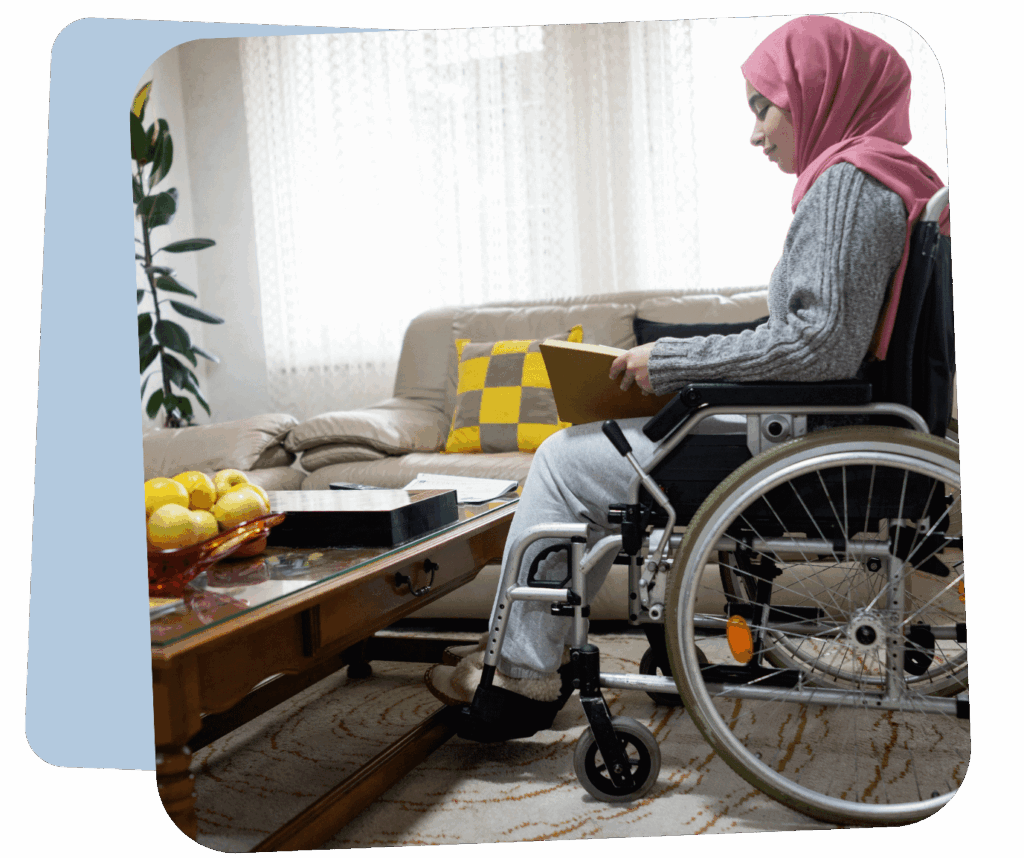
Short-term accommodation in Bayswater can provide a valuable break from usual care arrangements while helping NDIS participants maintain their routines, wellbeing and connection with the community. For families and informal carers, short stays can also create time to rest and manage caring responsibilities.
Under current NDIS guidance, short-term accommodation is now described by the NDIS as short-term respite. It is designed to give participants time apart from their usual care arrangements while their primary informal supports, such as family, friends or carers, have a short break.
For people living in Bayswater and surrounding Western Australian communities, the right short-term support can provide a safe and comfortable change of environment without losing the personalised assistance they normally need.
What Is Short-Term Accommodation?
Short-term accommodation, also known as short-term respite, is an NDIS support that can provide accommodation and disability-related assistance for a limited period. It can give a participant time away from their usual living arrangement while allowing their primary informal supports to take a break from their caring role.
Depending on individual circumstances and NDIS funding, short-term respite may involve staying in a respite facility, hotel, motel, short-stay rental, cabin, cottage or another suitable accommodation setting. It may also involve receiving support in the participant’s own home or through an appropriate homestay arrangement.
The purpose is not simply to provide somewhere to stay. The focus is on making sure the participant receives the disability-related support they need to continue everyday activities and maintain their usual level of care while their informal supports have time apart.
Why Short-Term Accommodation Can Benefit Participants and Families
Short-term accommodation can be useful for both participants and the people who support them. A well-planned short stay can provide a change of environment, maintain familiar routines and give families an opportunity to recharge.
- A planned break from usual care arrangements
- Continued assistance with everyday personal activities
- Time for family members and carers to rest and manage caring responsibilities
- Opportunities to maintain social and community connections
- A comfortable environment suited to the participant’s support needs
- Time away from the usual home environment without losing necessary disability-related support
Every participant’s circumstances are different, so short-term respite should be considered alongside the person’s NDIS plan, support needs, usual living arrangement and goals. The NDIS also considers other support options before funding short-term respite in some circumstances.
1. Gives Families and Carers Time to Recharge
Caring for a person with disability can be rewarding, but it can also involve ongoing physical, emotional and practical responsibilities. A planned short stay can give family members or informal carers time to rest, attend to other responsibilities or simply have some time away from their usual caring role.
This does not mean that families are stepping away from their responsibilities. Instead, a suitable respite arrangement can help sustain the usual caring relationship by providing a planned period of support and time apart.
For families in Bayswater, Ellenbrook, Henley Brook and nearby Perth communities, having access to suitable short-term accommodation support can make it easier to plan breaks around family commitments and participant needs.
2. Supports Participant Wellbeing
A change of environment can sometimes be positive for a participant’s wellbeing. A short stay may provide a different daily routine, opportunities for social interaction and time to participate in activities that are appropriate for their interests and support requirements.
The experience should remain participant-focused. Accommodation, routines and support arrangements should consider the person’s communication preferences, personal care requirements, sensory needs, mobility and usual daily activities.
Good planning can help a participant feel comfortable before, during and after a short stay. Familiar routines and clear communication can be particularly important when someone finds changes in their environment difficult.
3. Maintains Everyday Personal Activities
Short-term respite is not simply about providing accommodation. Current NDIS guidance explains that funding may cover supports that help participants with everyday activities such as getting ready, showering, cooking, eating and drinking, cleaning and other daily tasks, depending on their individual support needs and plan.
This means a participant can continue receiving the assistance they normally require while away from their usual care arrangement. Maintaining familiar routines can make a short stay more comfortable and reduce unnecessary disruption.
Daily assistance may be coordinated around the participant’s usual routine, including personal care, meal preparation, household tasks and other activities that are connected to their disability-related support needs.
4. Encourages Community Participation
A short stay can also provide opportunities for participants to remain connected with their local community. Depending on a person’s interests and NDIS funding, support may help them access social, cultural or community activities while staying in short-term accommodation.
For example, a participant in Bayswater may enjoy visiting local community spaces, meeting friends, attending an activity or spending time outdoors. Someone staying near Ellenbrook or Henley Brook may prefer activities closer to home that fit comfortably within their routine.
Support for participation in community and social activities should be based on the participant’s preferences, goals and individual support needs rather than a standard activity schedule.
5. Provides a Safe Change of Environment
Sometimes participants and families benefit from having a planned alternative to the usual home environment. A suitable short-term accommodation setting can provide a comfortable place to stay while maintaining access to the disability-related assistance the participant normally needs.
Accommodation should be appropriate to the person’s accessibility and support requirements. Depending on the participant, this may include suitable bathroom access, mobility considerations, a comfortable sleeping environment and other practical features.
The NDIS states that standard accommodation used for short-term respite should be clean and comfortable and include basic amenities and the accessibility features a participant needs.
6. Can Support a Participant’s Usual Living Arrangement
One of the important benefits of respite support is that it can help sustain an existing living arrangement. When families and informal supports have opportunities to take planned breaks, they may be better positioned to continue providing support over time.
This is particularly relevant when a participant receives substantial disability-related assistance from family members or other informal supports. Short-term respite is intended to provide time apart while supporting the participant’s usual level of care.
It is important to remember that short-term respite is only one possible support option. Depending on a person’s circumstances, other NDIS supports may be more appropriate, including assistance with personal care at home, community participation or other forms of disability support.
7. Provides Opportunities for Social Connection
Social connection can be an important part of participant wellbeing. A short stay may provide opportunities to interact with support workers, other participants, community members or people involved in activities that match the participant’s interests.
Social activities should never be treated as one-size-fits-all. Some participants may enjoy group activities, while others may prefer quieter experiences, individual outings or familiar community environments.
Personalised support allows the participant’s communication style, preferences, confidence and comfort level to guide how social participation is approached.
8. Helps Participants Maintain Familiar Routines
Moving temporarily to another setting does not mean a participant needs to abandon their usual routine. In many cases, maintaining familiar daily activities can help make a short stay easier and more predictable.
- Following a familiar morning and evening routine
- Maintaining preferred meal times
- Continuing personal care routines
- Using familiar communication methods
- Keeping preferred leisure activities
- Maintaining suitable community and social connections
Before a short stay begins, families and support providers can discuss the participant’s preferences, support requirements and important routines. Clear information can help everyone understand what support is required.
Short-Term Accommodation in Bayswater for Different Participant Needs
Participants have different reasons for accessing short-term accommodation. Some may need a planned break for their family, while others may require temporary support because their usual informal support arrangements are unavailable for a short period.
A participant’s needs may also change over time. For this reason, short-term accommodation should be planned around the person’s current circumstances rather than based on a standard package of services.
For participants who are exploring longer-term independent living arrangements, it can also be helpful to understand the difference between short-term respite, supported independent living and specialist disability accommodation.
Short-Term Accommodation vs SIL and SDA
Short-term accommodation, Supported Independent Living (SIL) and Specialist Disability Accommodation (SDA) are different types of support and should not be treated as interchangeable.
| Support | Primary purpose | Typical focus |
|---|---|---|
| Short-term accommodation / respite | Provide a temporary break from usual care arrangements | Short stays, personal support and maintaining usual care |
| Supported Independent Living | Provide ongoing support for people living independently | Daily living assistance, supervision and developing independence |
| Specialist Disability Accommodation | Provide specially designed housing for eligible participants | Accessible housing features and appropriate physical design |
SIL is focused on ongoing support with day-to-day tasks and developing independence, while SDA relates to specialised housing for eligible participants. SDA does not itself include personal care, SIL or other disability supports delivered in the home.
If longer-term independent living is being considered, participants and families may also explore SIL accommodation options and other home and living supports that may be suitable for their circumstances.
How Short-Term Accommodation Can Fit Into NDIS Support
NDIS funding is based on a participant’s individual circumstances, disability-related support needs and plan. Not every participant will have the same support budgets or funding categories, so it is important to understand what is included in the individual plan before arranging services.
If a participant believes short-term accommodation or respite may be appropriate, they can discuss their circumstances with their NDIS contact. A support coordinator, where included in the participant’s plan, may also help the participant understand available supports and work with providers.
Families should avoid assuming that every short stay or holiday-related expense is covered by the NDIS. Current NDIS guidance places limits on what short-term respite funding can be used for, including certain holiday, travel, entertainment and meal expenses.
Planning a Short Stay in Bayswater
Good preparation can make short-term accommodation more comfortable for everyone involved. Before the stay, the participant, family and support provider should discuss the person’s routines, communication preferences, personal care needs, medication-related arrangements where relevant, accessibility requirements and preferred activities.
- Confirm the participant’s current support requirements
- Discuss daily routines and personal preferences
- Check accessibility and accommodation features
- Plan suitable community or social activities
- Share important communication information
- Confirm how support will be delivered during the stay
- Review the participant’s NDIS funding and plan requirements
Families may also benefit from discussing how the participant will transition back home after the stay. A clear plan can help reduce uncertainty and make the experience more predictable.
Short-Term Accommodation Across Western Australia
Although this article focuses on Bayswater, participants may seek disability support across a wider area of Western Australia. Local circumstances, available accommodation and individual support needs can influence which option is appropriate.
Participants and families may also be looking for services in Ellenbrook, Henley Brook, Joondalup, Kalamunda, Mandurah and Cockburn. Local support can be particularly useful when maintaining familiar community connections, routines and existing informal support networks is important.
For people considering ongoing support at home, in-home disability support may also be relevant. In-home assistance can help participants manage everyday activities without necessarily requiring a temporary stay away from home.
When Might Short-Term Respite Be Appropriate?
Short-term respite may be considered when a participant’s usual informal support arrangement needs a temporary break. Current NDIS guidance indicates that eligibility can depend on factors such as living with primary informal supports or receiving daily drop-in support from them and receiving substantial disability-related support from those informal supports.
It is important to remember that eligibility and funding are individual. A participant should consider their own NDIS plan and circumstances rather than assuming that short-term accommodation will automatically be funded.
The Participant Should Remain at the Centre of the Support
The most effective short-term accommodation arrangements are built around the participant rather than around a standard service schedule. Their preferences, routines, communication needs, support requirements and personal goals should guide how the short stay is planned.
For families in Bayswater and surrounding WA suburbs, this participant-focused approach can make temporary accommodation feel less disruptive and more like a planned extension of the person’s usual support arrangements.
How Support Coordination Can Help
Some participants may need help understanding their NDIS funding, identifying suitable supports or coordinating different services. Where support coordination is included in a participant’s plan, a support coordinator can help them become more confident and self-sufficient in managing their supports and providers.
Participants can explore support coordination services when they need assistance navigating their NDIS supports. The role of support coordination will depend on the participant’s plan, goals and individual circumstances.
Making Short-Term Accommodation a Positive Experience
A short stay can be much more than time away from home. With appropriate planning and support, it can provide a comfortable break for a participant while giving families and informal carers valuable time to recharge.
For participants in Bayswater, Ellenbrook, Henley Brook and other parts of Western Australia, the key is finding an arrangement that respects individual needs and maintains the level of disability-related support required during the stay.
Short-term accommodation should always be considered as part of the participant’s broader NDIS support arrangements. When planned carefully, it can help sustain existing care relationships, support participant wellbeing and provide families with a practical opportunity to take a meaningful break.
Frequently Asked Questions
What is short-term accommodation in Bayswater?
Short-term accommodation, also called short-term respite by the NDIS, provides temporary support away from a participant’s usual care arrangements. It can include suitable accommodation and disability-related support that helps the participant continue their everyday activities while their primary informal supports take a short break.
Who can access NDIS short-term accommodation?
Eligibility depends on a participant’s individual circumstances and NDIS plan. Current NDIS guidance indicates that short-term respite may be available to participants who live with primary informal supports or receive daily drop-in support from them and receive substantial disability-related support from those informal supports.
What support can be provided during a short stay?
Depending on the participant’s needs and funding, short-term respite can include support with everyday activities such as personal care, getting ready, cooking, eating, drinking, cleaning and other tasks the participant normally receives help with. It may also include support to participate in appropriate community, cultural or social activities.
How is short-term accommodation different from SIL?
Short-term accommodation is intended to provide a temporary break from usual care arrangements, while Supported Independent Living is designed for ongoing support with everyday tasks for eligible participants living independently. They serve different purposes and should be considered separately based on the participant’s needs and NDIS plan.
Does Brightwest Care provide disability support across Western Australia?
Brightwest Care supports participants across Western Australia, with local service relevance for communities including Bayswater, Ellenbrook, Henley Brook, Joondalup, Kalamunda, Mandurah and Cockburn. The availability and suitability of individual services depend on participant needs, location and the supports included in their NDIS plan.

